Electrochemical AFM
EC-AFM
In-situ imaging of electrochemical reactions in liquid environments
What is EC-AFM
(Electrochemical AFM)
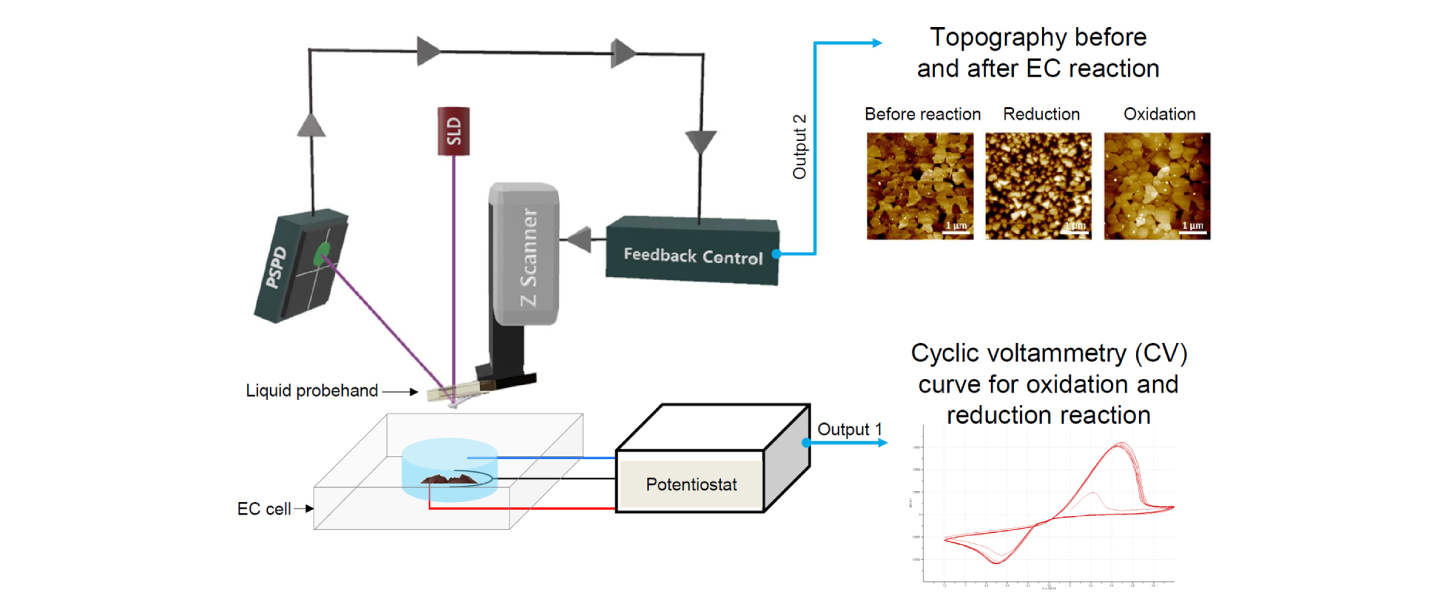
EC-AFM measures topographic changes and surface processes of materials while simultaneously controlling electrochemical potential in a liquid cell.
In EC-AFM, the sample is immersed in an electrolyte solution inside a dedicated electrochemical cell. A potentiostat applies a controlled bias between three electrodes—working, reference, and counter—inducing oxidation or reduction reactions on the sample surface. While the reactions occur, the AFM tip scans in Contact or Non-contact mode to capture real-time topographical and morphological changes.

This setup allows simultaneous acquisition of electrochemical measurements, such as cyclic voltammetry (CV) curves, and high-resolution AFM images before, during, and after the reactions. By monitoring these dynamic processes, researchers can study corrosion, deposition, dissolution, and battery electrode behavior at the nanoscale.
Reasons to Use This Mode
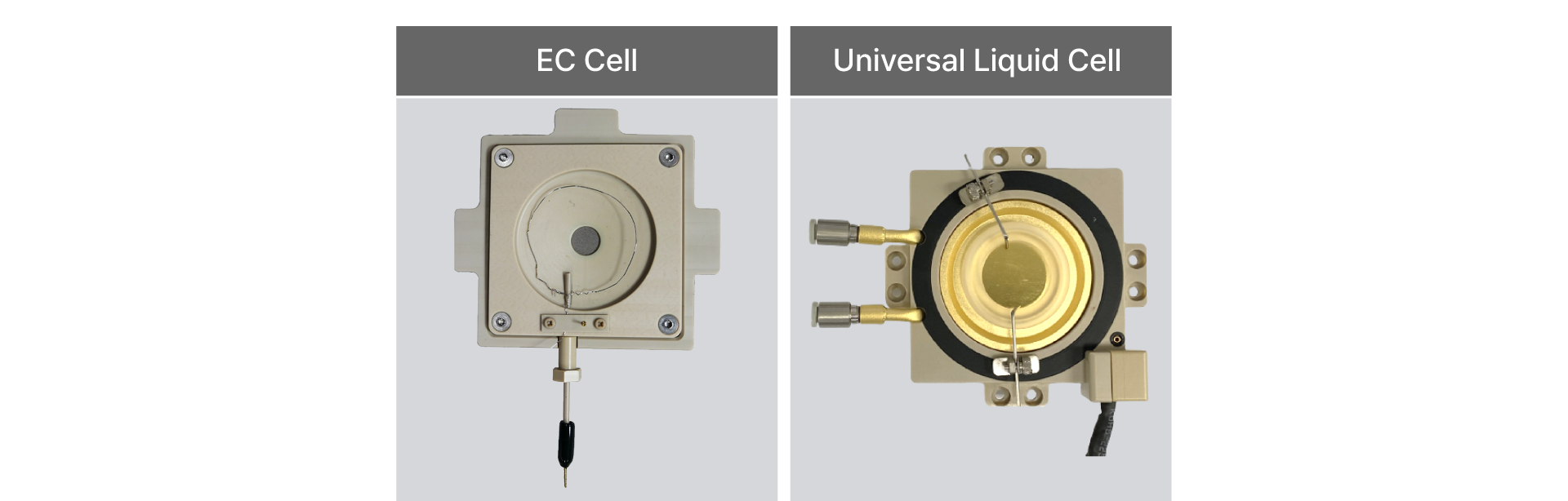
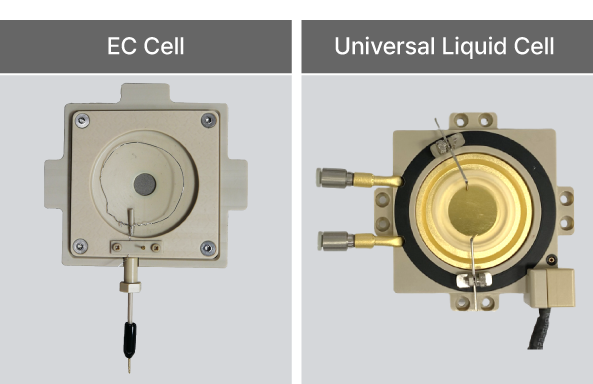
EC-AFM accommodates a variety of specialized EC cells (EC cell and Universal Liquid Cell with EC toolkit), enabling experiments across diverse sample sizes and configurations. Optional temperature control and modular electrode setups further enhance flexibility for advanced applications, including lithium battery material research and corrosion protection studies.
Applications and Use Cases
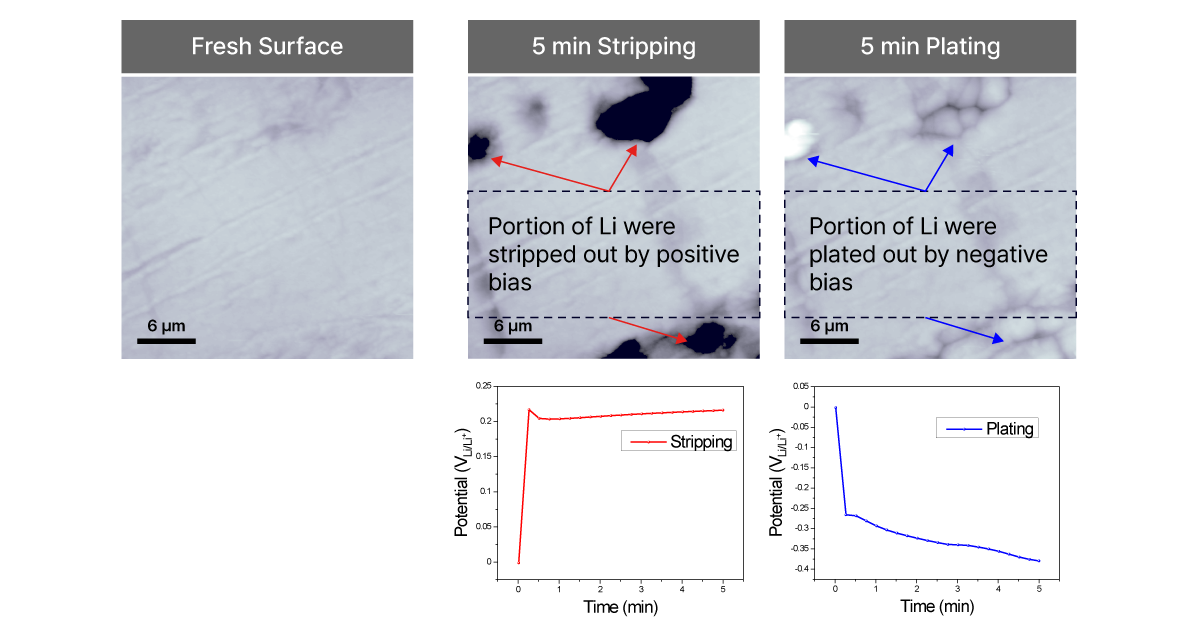
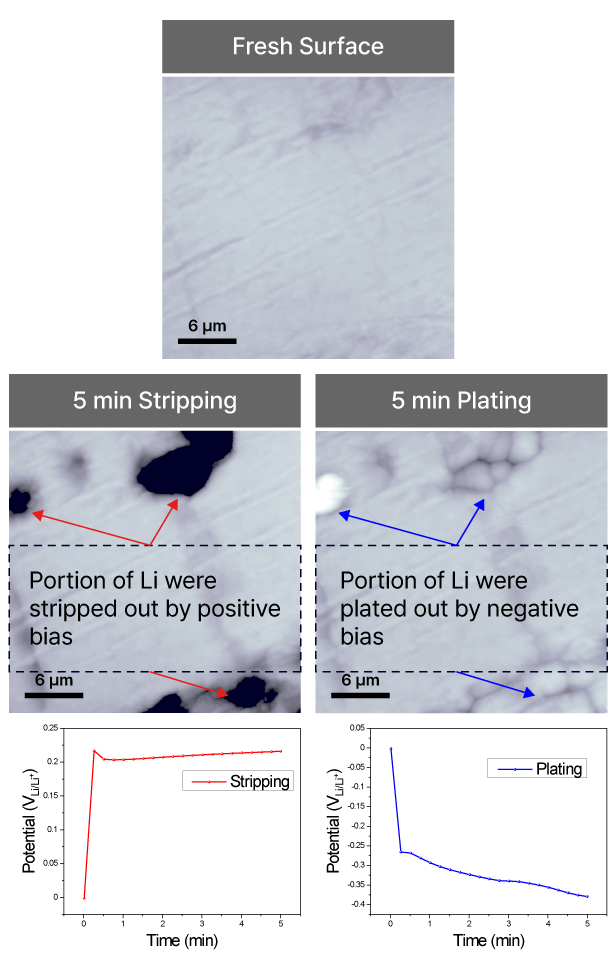
The experiment measured Li behavior on a Li metal plate instead of Cu under identical conditions, using Li as the working electrode. AFM characterized the surface morphology before and after applying ±2 mA/cm² current density. Positive current induced Li stripping, while negative current caused Li plating, with the potentiostat maintaining the current and tracking corresponding bias changes. These reversible stripping and plating processes reflect Li ion removal and deposition on the metal surface, key mechanisms affecting battery performance and safety.
  • Sample: Li Surface
  • System: NX10 (in Dry Room)
  • Scan Size: 30 µm × 30 µm
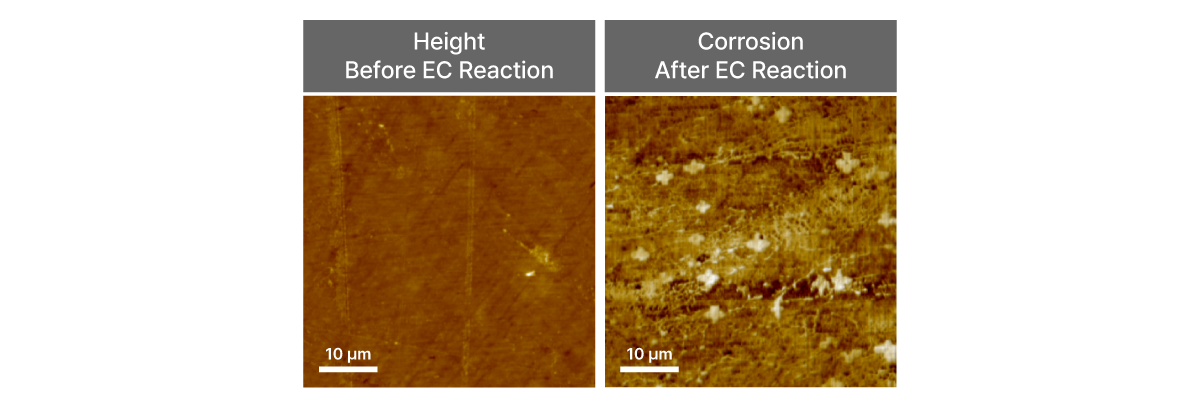
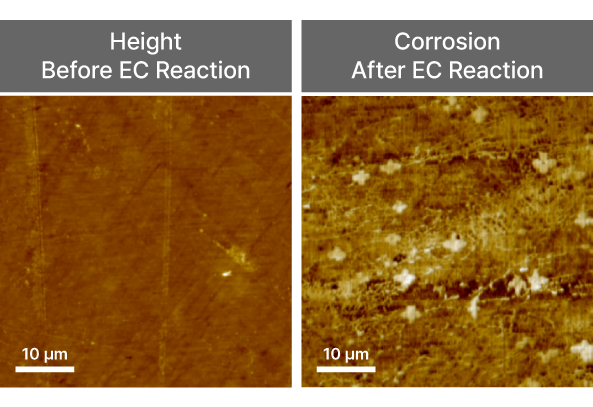
Corrosion of the metal surface was analyzed using EC-AFM in a 3.5 wt% NaCl solution. This application aimed to verify electrochemical corrosion behavior and compare the corrosion resistance of bare and chemically treated cast iron under identical conditions. Using Ag/AgCl and Pt-Ir as reference and counter electrodes, respectively, a -0.3 V bias was applied to monitor surface changes before and after the reaction. EC-AFM images showed a rougher morphology on the corroded bare cast iron, indicating localized corrosion due to surface non-uniformity and Cl− ion attack.
  • Sample: Cast Iron Surface
  • System: NX10
  • Scan Size: 50 µm × 50 µm