Scanning Tunneling Microscopy
STM
Atomic-scale electronic surface imaging based on tunneling current detection between tip and sample
What is STM
(Scanning Tunneling Microscopy)
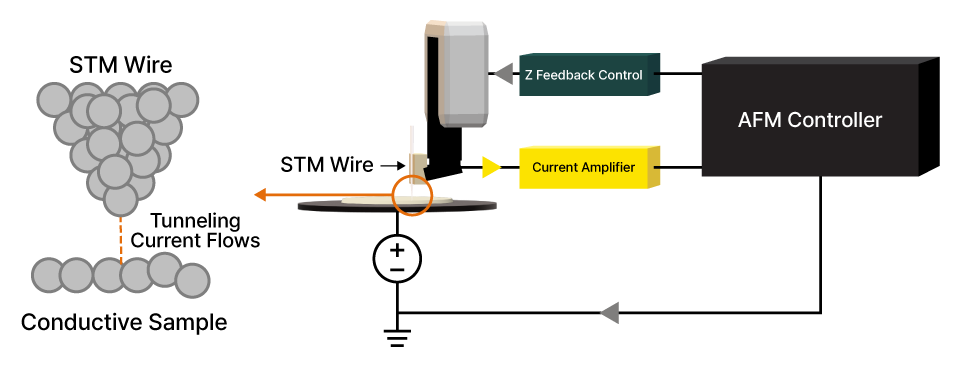
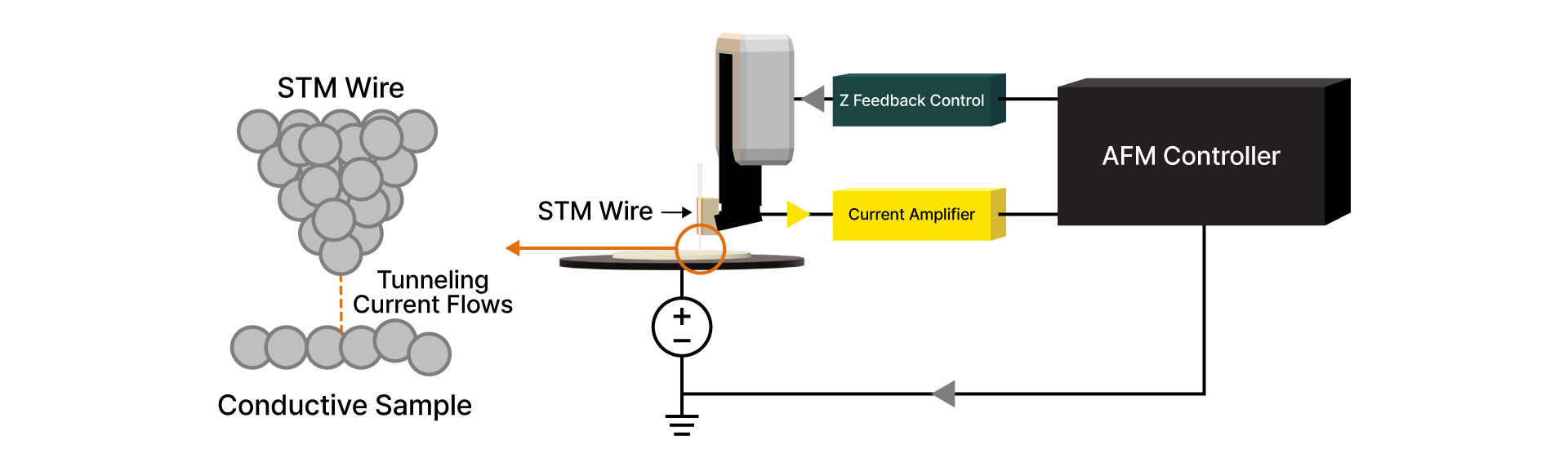
STM measures local electronic properties and topography by utilizing a quantum mechanical tunneling current flowing between an ultra-sharp conductive tip and a sample surface, allowing for atomic-scale resolution imaging.
A fine metal wire tip approaches the conductive sample surface while a bias voltage is applied between them. As the tip nears the surface, electrons tunnel across the gap, creating a measurable current that exponentially depends on tip–sample distance. The system maintains a constant tunneling current through Z-feedback control, recording height variations as the tip scans in XY directions. This mechanism allows STM to achieve sub-nanometer vertical resolution and visualize atomic terraces, surface reconstructions, and electronic properties. Because the tunneling current is extremely sensitive to separation distance, stable vibration isolation and precise tip positioning are essential.
Reasons to Use This Mode
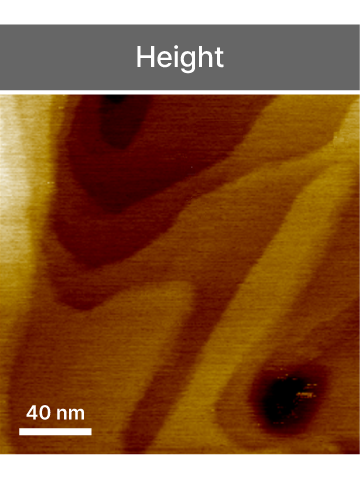
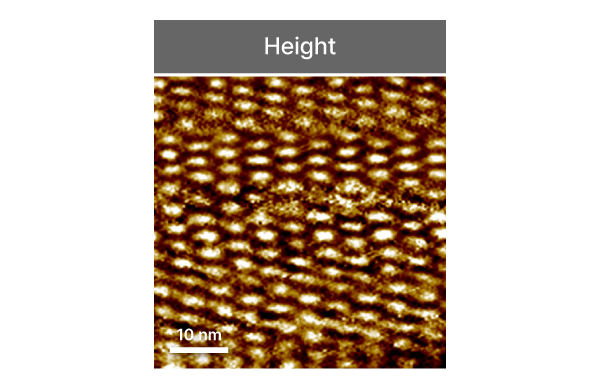
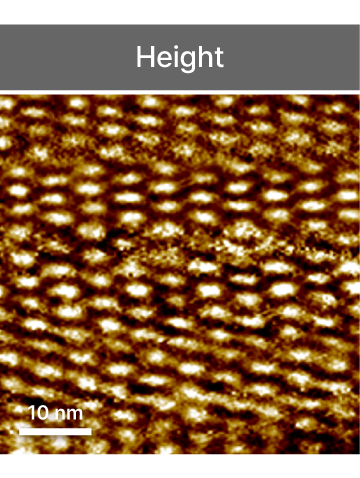
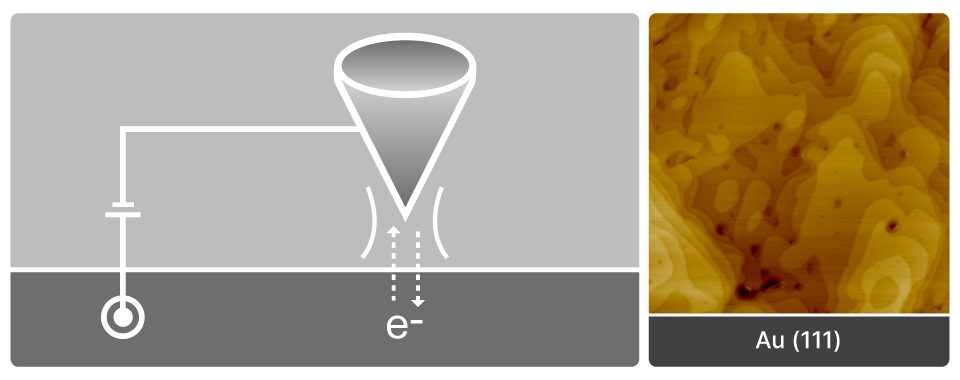
STM’s unique advantage lies in its unprecedented atomic-scale imaging capability, allowing direct visualization of single atomic terraces, step edges, periodic superstructures and fine surface features on materials such as Au (111) and moiré patterns on layered materials.
  • Sample: Atomic Terrace of Au (111)
  • System: NX10
  • Scan Size: 200 nm × 200 nm
  • Sample: HOPG on Graphene
  • System: NX10
  • Scan Size: 40 nm × 40 nm
Applications and Use Cases
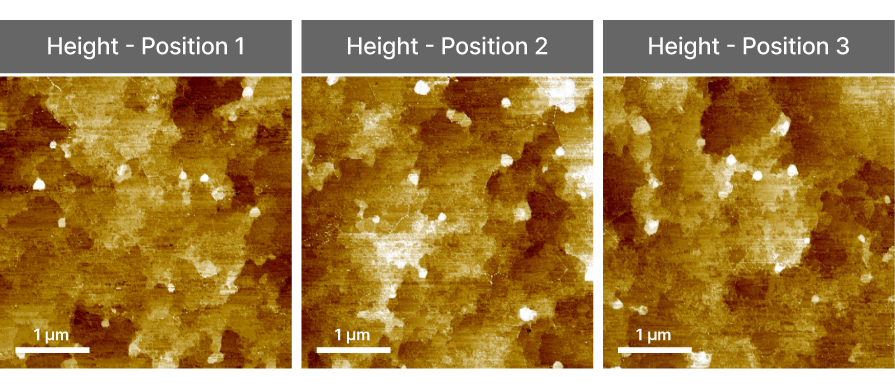
STM’s versatility is highlighted by its ability to image not only atomic-scale features but also micrometer-scale surface variations. The presented images show topographic maps of germanium acquired at different sample positions across a 5 μm × 5 μm scan area, demonstrating STM’s capacity for high-resolution, wide-area surface mapping. This allows detailed analysis of both local nanoscale features and broader morphological trends, essential for comprehensive surface characterization in materials research.
  • Sample: Germanium
  • System: NX10
  • Scan Size: 5 µm × 5 µm