Photocurrent Mapping
PCM
Mapping nanoscale photoconductivity and carrier dynamics under controlled light illumination
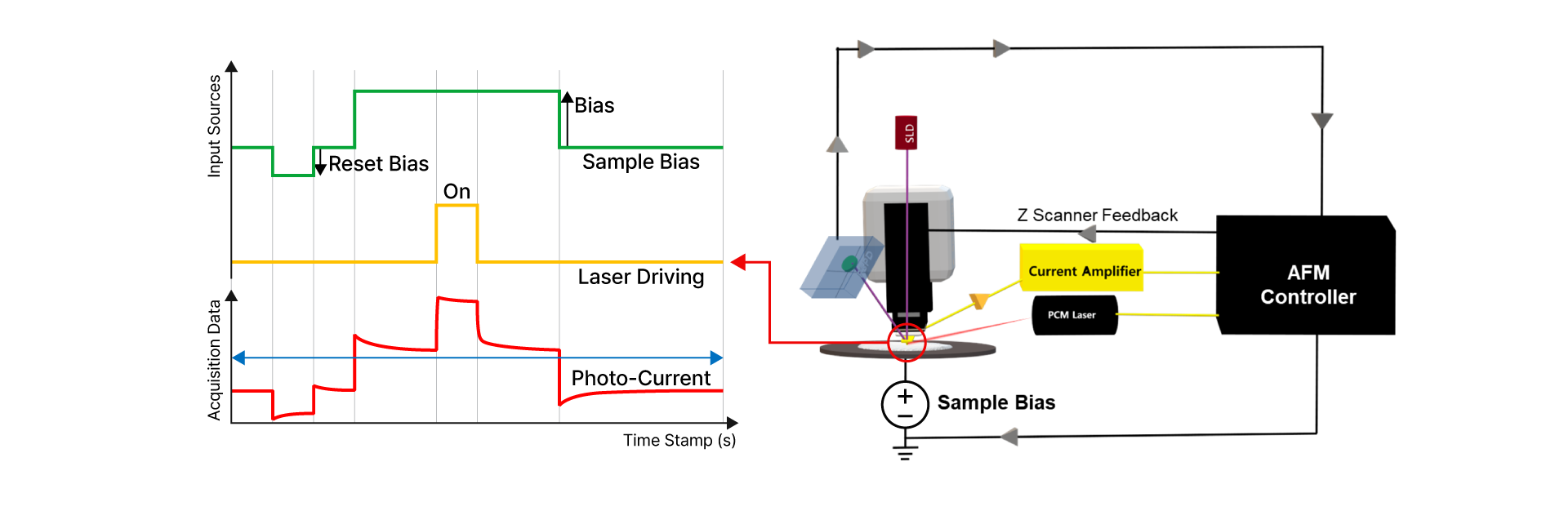
What is PCM
(Photocurrent Mapping)
PCM measures local current or photocurrent response to light excitation, allowing direct visualization of charge transport and photoresponse behavior in optoelectronic materials.
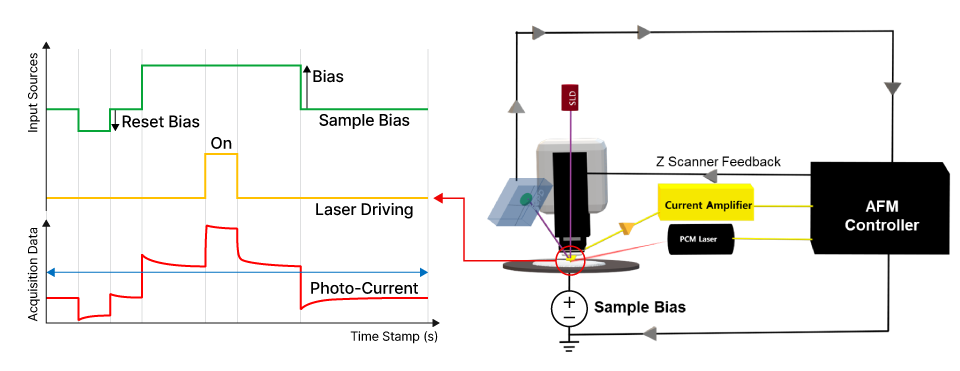
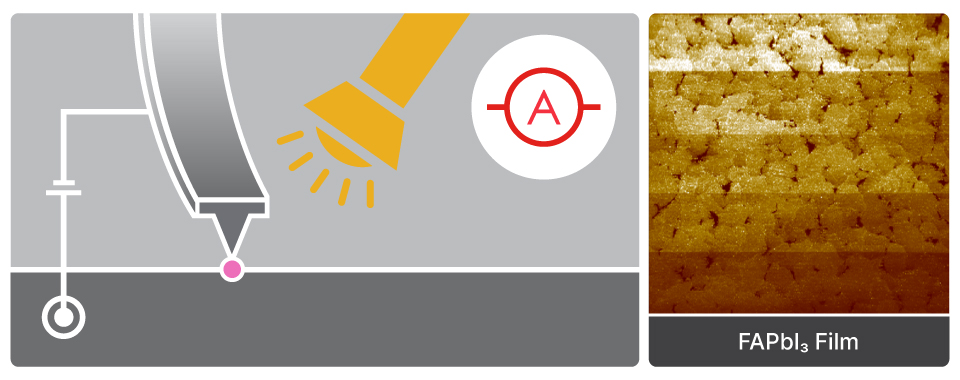
In PCM, the conductive tip maintains contact with the sample while a modulated laser illuminates the surface. This illumination excites electrons into the conduction band, resulting in a measurable photocurrent that flows through the conductive tip into the current amplifier. By synchronizing the laser modulation and sample bias control, PCM can record time-resolved current responses across selected points or grids on the sample. PCM allows researchers to capture both dark current and photo-induced current, revealing detailed information about charge carrier generation, transport, and decay dynamics. The resulting maps visualize spatial variations in photovoltaic performance, defects, or inhomogeneities.
Reasons to Use This Mode
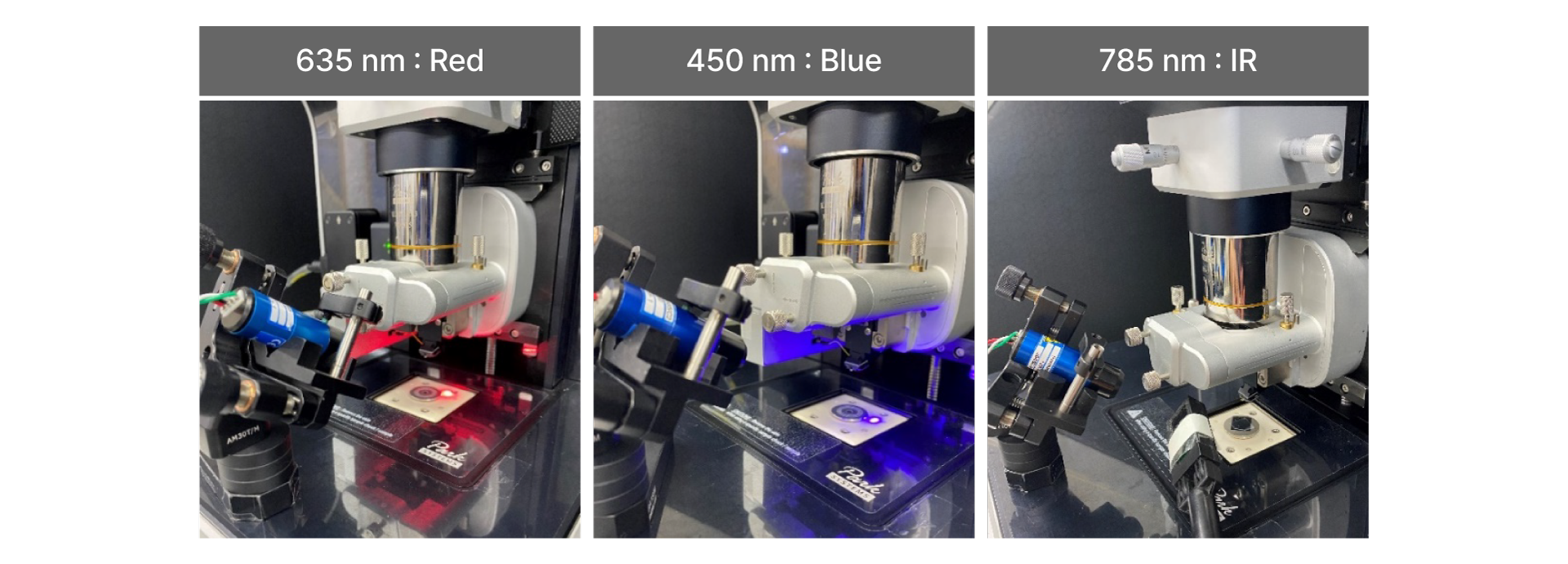
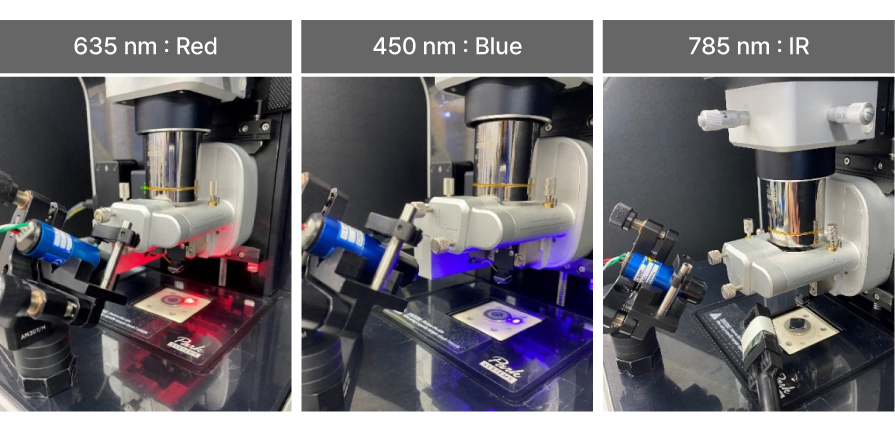
A variety of light sources covering different wavelength ranges is essential for studies utilizing PCM. In this context, Park Systems provides an optimal setup for investigating the photovoltaic effect using external laser and sample bias. Applicable types of light sources are red (Wavelength of 635 nm), blue (405 nm), infrared (IR, 785 nm) of external lasers, and internal LED (White source, 400 ~ 750 nm) and SLD (830 nm). On/off control for external laser and SLD, 0~100 % (Adjustable unit 0.1%) intensity control for LED is possible.
Applications and Use Cases
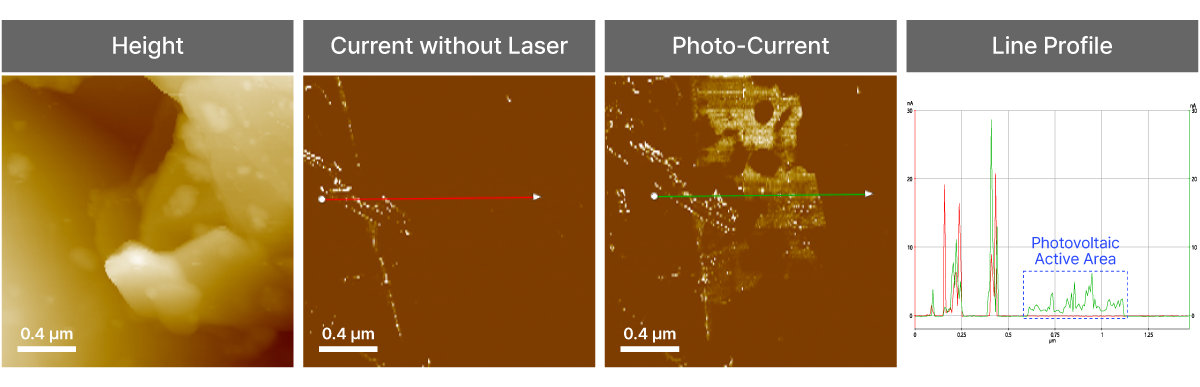
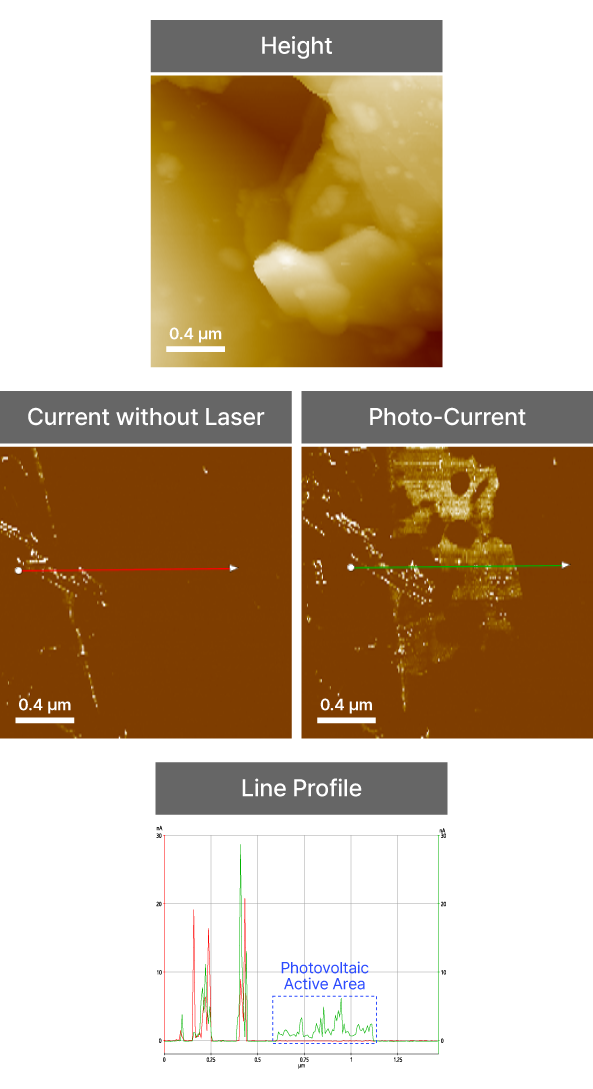
Local variations in photovoltaic activity of perovskite films were examined by PCM, revealing nanoscale regions with enhanced photo-generated current. Height, dark current, and photo-current maps, along with line profiles, confirm active photovoltaic areas, demonstrating spatial heterogeneity crucial for device optimization.
  • Sample: Perovskite Films
  • System: NX10
  • Scan Size: 2 µm × 2 µm
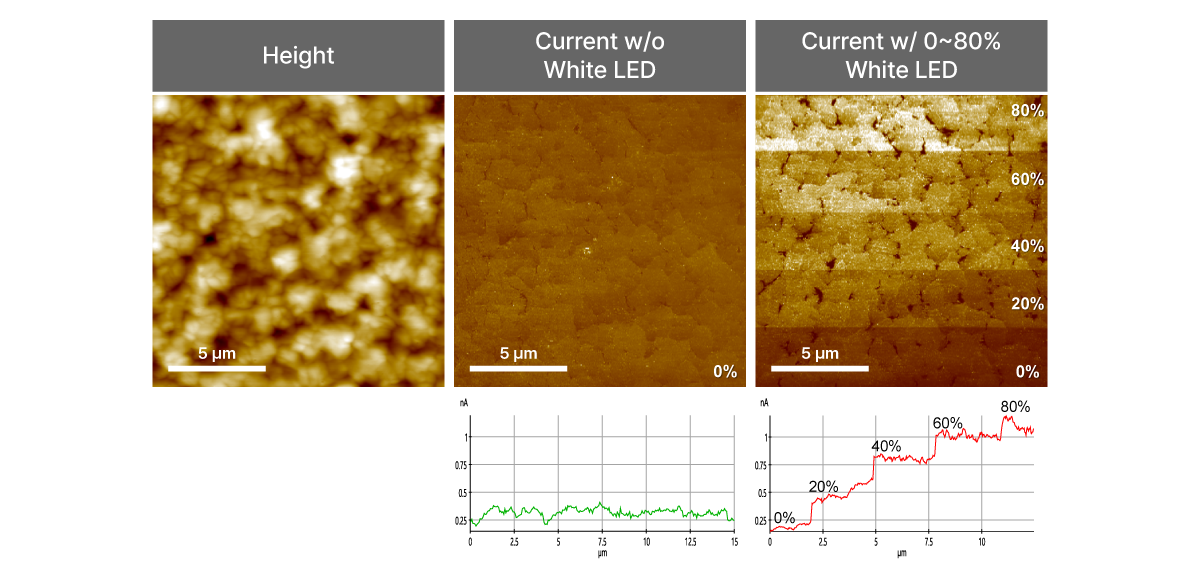
FAPbI₃ films exhibit efficient photoresponse, as shown by PCM images with increasing current under higher white LED intensity. The extracted current rises with illumination, reflecting enhanced charge generation, but shows saturation behavior at higher intensities due to charge recombination and diffusion limits, consistent with typical nonlinear characteristics of perovskite solar cells.
  • Sample: FAPbI₃ Film
  • System: NX10
  • Scan Size: 15 µm × 15 µm