Scanning Capacitance Microscopy
SCM
Nanoscale semiconductor doping and carrier profiling by detecting capacitance variations between the AFM tip and sample under AC bias
What is SCM
(Scanning Capacitance Microscopy)
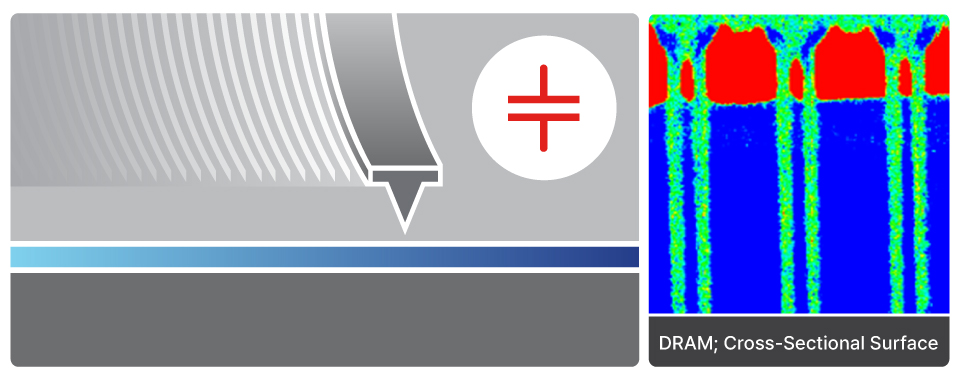
SCM measures nanoscale variations in capacitance to visualize doping concentration and polarity in semiconductor surfaces with high spatial resolution.
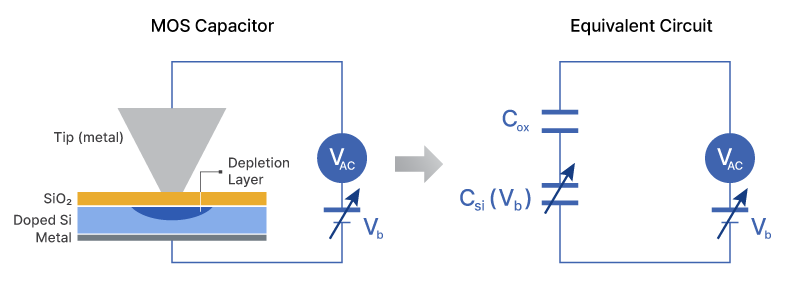
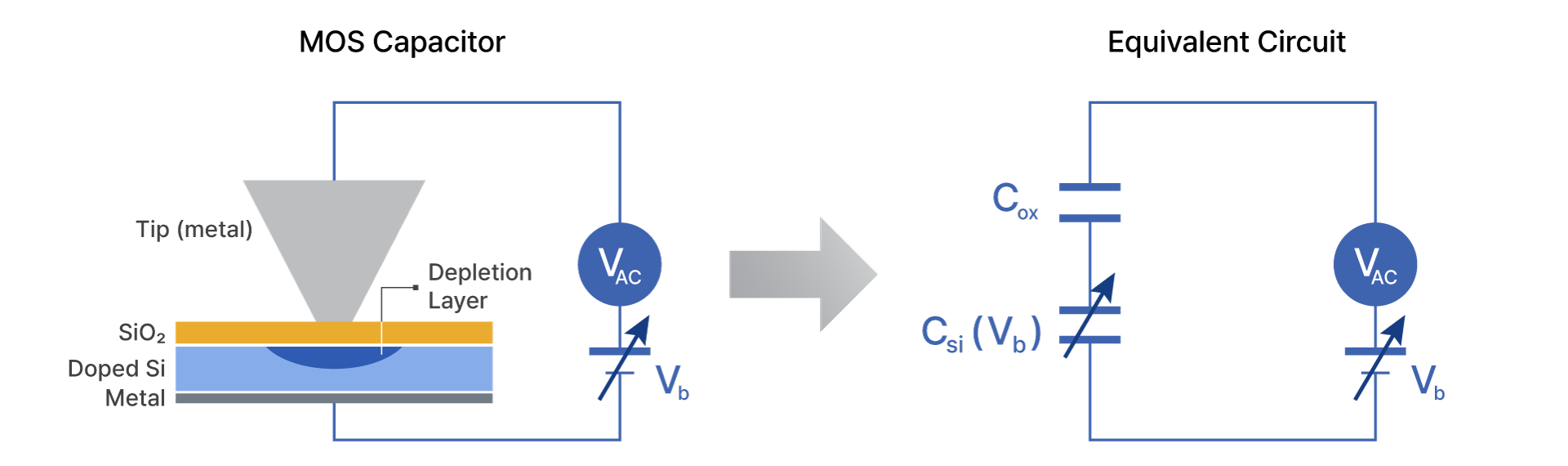
A conductive AFM tip and sample surface act together as a nanoscale metal–oxide–semiconductor (MOS) capacitor, forming a localized junction whose capacitance depends on the underlying dopant characteristics. When an AC modulation voltage is applied to the probe, it periodically perturbs the charge carriers within the semiconductor, inducing local transitions between depletion and accumulation states beneath the tip.
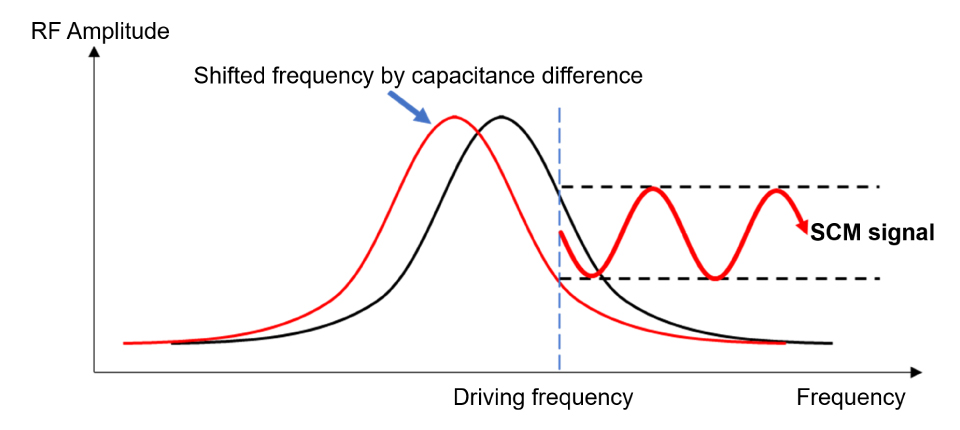
A resonant radio-frequency (RF) circuit connected to the tip–sample system monitors capacitance modulations with high temporal resolution, supporting sensitive detection of electronic changes in the sample. As the doping type and concentration vary on the sample surface, the RF signal is shifted in both direction and magnitude, which alters the resonance curve and affects the measured signal. Choosing a fixed driving frequency produces an SCM signal that is delivered to the AFM controller, enabling two channels from the lock-in amplifier: amplitude (linked to doping level) and phase (indicating p- or n-type regions). In this way, carrier density and conductivity type can be mapped with nanometer resolution, using the frequency shifts and signal changes.
Reasons to Use This Mode
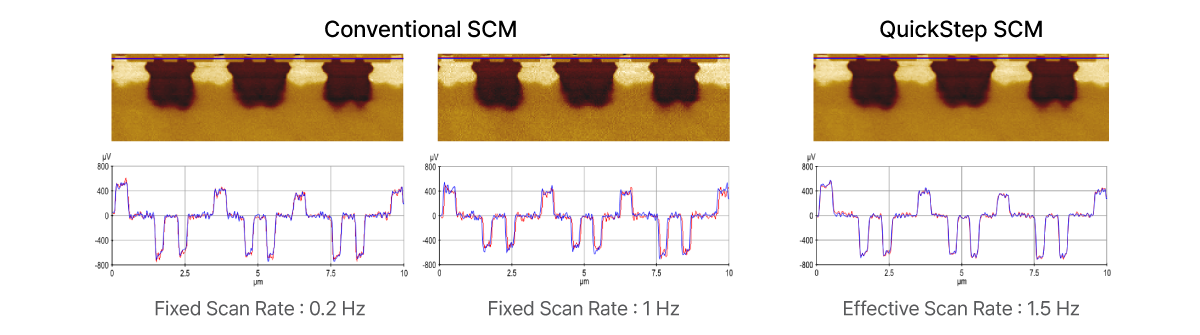
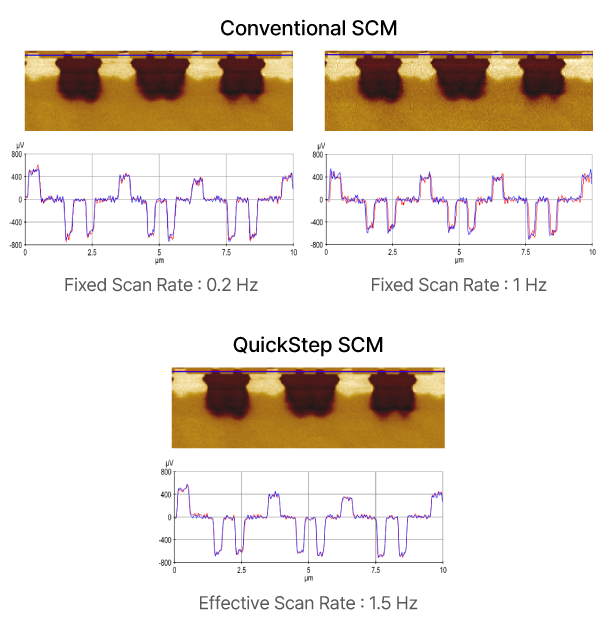
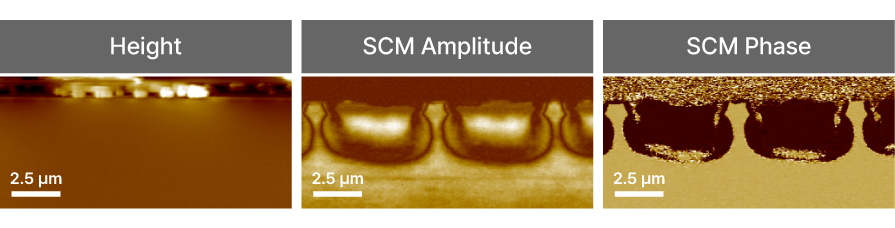
Park Systems provides the advanced SCM technique for faster and reliable measurement, as QuickStep™ SCM. It is designed to overcome the limitations of conventional SCM, which typically requires very slow scan speeds to achieve a high signal-to-noise ratio. Traditional SCM methods collect data continuously as the probe moves, but increasing the scan speed under these conditions can significantly degrade data quality, as the detector has less time to acquire accurate measurements at each point. In contrast, QuickStep™ SCM takes a fundamentally different approach by employing a step-and-collect methodology: the XY scanner pauses at each pixel location to record data, then rapidly hops to the next measurement point. This allows for significantly faster overall scan rates while preserving, or even enhancing, the sensitivity and image quality compared to traditional SCM performed at slow scan speeds. Moreover, the system enables flexible control over the data acquisition time at each pixel, ensuring that optimal signal quality is maintained even as throughput increases.
  • Sample: DRAM
  • System: NX10
  • Scan Size: 10 µm × 3 µm
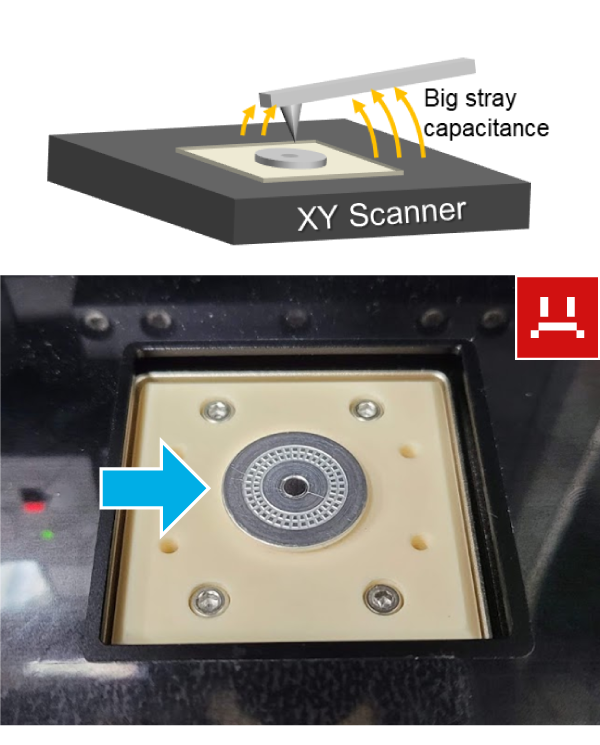
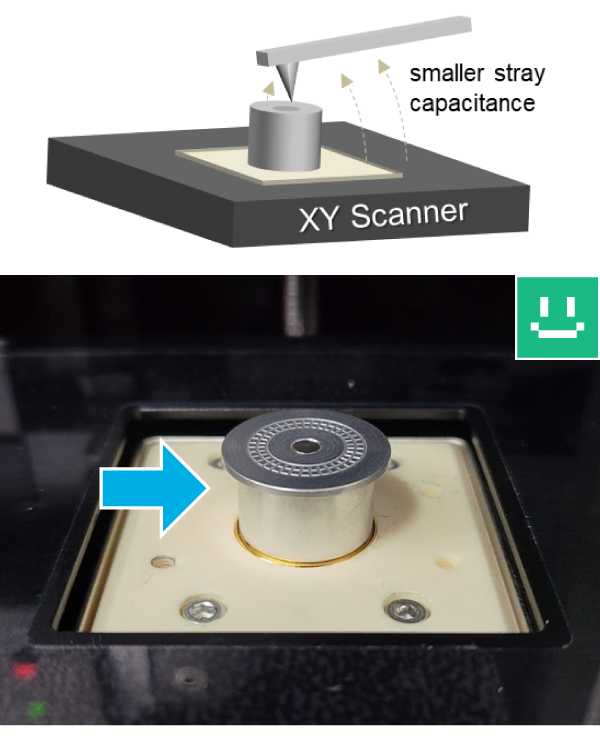
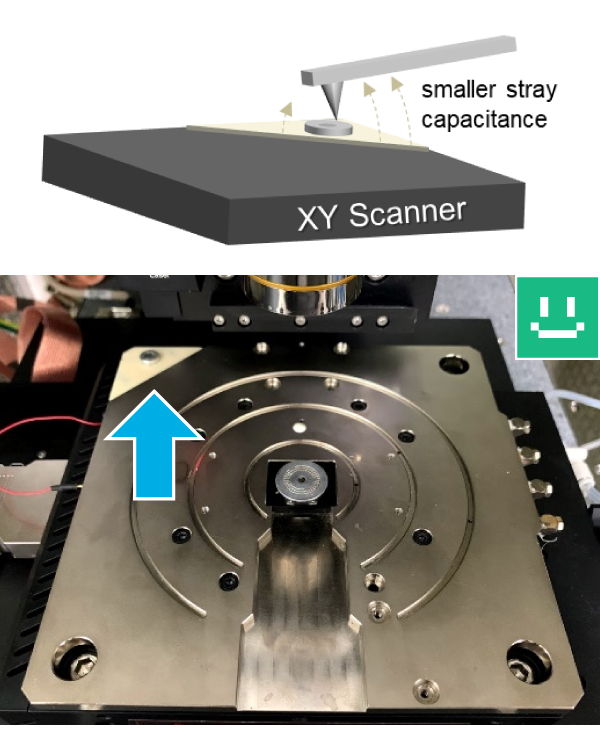
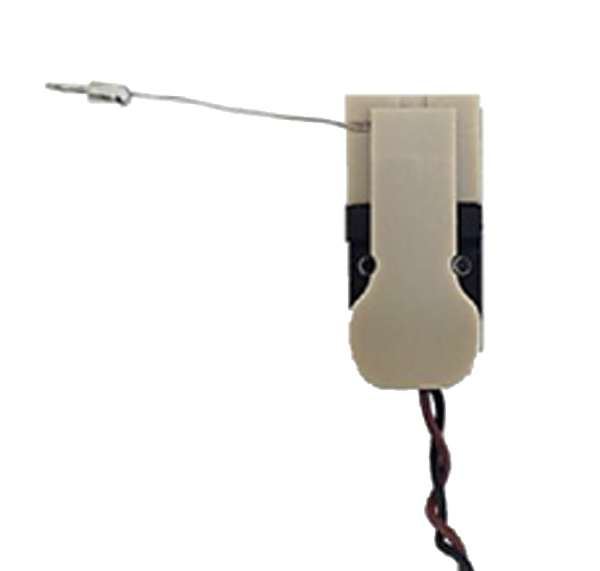
Park Systems provides dedicated accessories to ensure highly reliable SCM results, supporting precise and reproducible measurements for advanced semiconductor analysis. SCM measurements are sensitive to stray capacitance introduced by nearby metal parts. To minimize artifacts, ceramic or thick sample holders and unmounted cantilevers in clip-type probehand are recommended. The tip radius significantly influences resolution and sensitivity: sharper tips resolve smaller features, while larger tips improve capacitance contrast.
Default sample holder at the center of XY scanner
SCM thick sample holder at the center of XY scanner
Ceramic sample holder at the edge of wafer sample chuck
PEEK Material Clip-Type Probehand: Elimination of Stray Capacitance
Applications and Use Cases
Dynamic random-access memory (DRAM) is a type of semiconductor memory device that stores information in a dense array of cells, each consisting of a single transistor and a capacitor. When applying SCM to DRAM, the key measurement focus is on mapping doping profiles and electrical junctions in both the cell array and peripheral regions. SCM provides high-resolution images of capacitance variations, allowing direct visualization of dopant distribution, channel formation, and cell isolation—all critical for the performance and reliability of memory devices. The images demonstrate how SCM reveals both the topography and electrical signal separation within the DRAM cell structure, supporting in-depth failure analysis, yield improvement, and process optimization for next-generation memory manufacturing.
  • Sample: DRAM
  • System: NX10
  • Scan Size: 15 µm x 7 µm
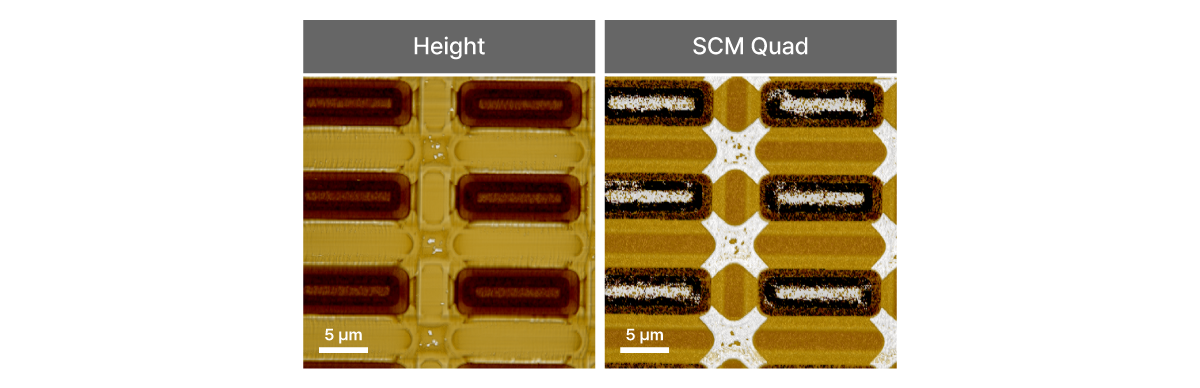
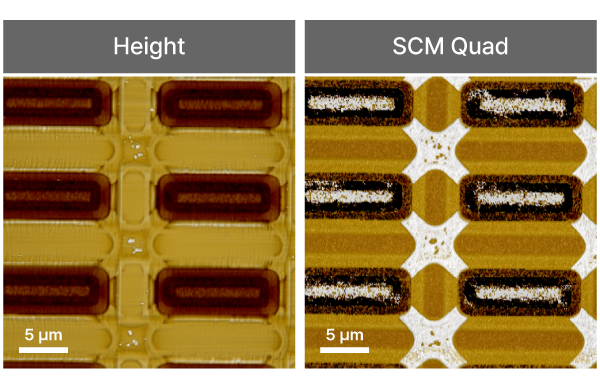
Silicon carbide (SiC) is a compound semiconductor material composed of silicon and carbon, renowned for its exceptional thermal stability, mechanical strength, and chemical resistance. Due to its high breakdown electric field and robust electrical properties even at high temperatures. When characterizing SiC devices, SCM is especially important for probing the spatial distribution of dopants and junctions within the device structure. The height image displays the structural pattern and depth variations across the SiC device, while the SCM quad image reveals spatial changes in capacitance that correlate with doping distributions and junction locations.
  • Sample: SiC
  • System: NX20
  • Scan Size: 30 µm × 30 µm